
July 02, 2026 • General • By Sayad Md Bayezid Hosan
MODULE 11: Off-Page Optimization — The Complete A to Z Mega Guide for Beginners
A complete, practical A to Z guide to Off-Page SEO for beginners — what off-page optimization actually is and why it sits alongside crawling, indexing, and on-page work as one of the three pillars covered in Module 10, the real fundamentals of link building, proven link building strategies you can start applying immediately, the genuine difference between white hat and black hat SEO, and the link acquisition techniques that build lasting search authority rather than short-term risk.
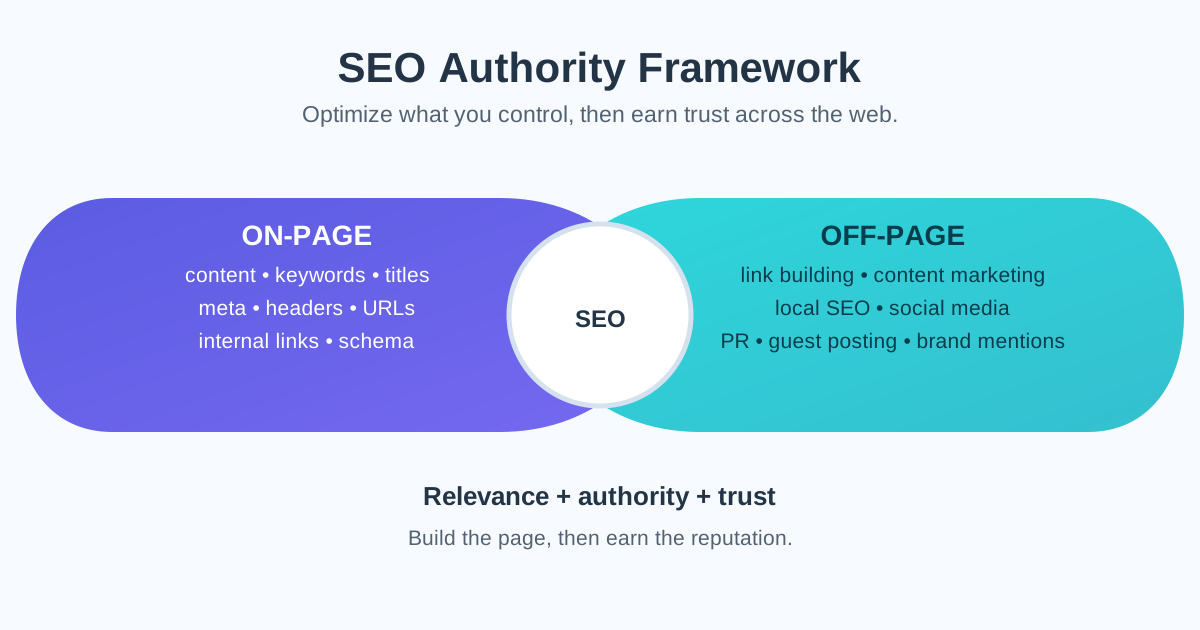
Welcome to Module 11: Off-Page Optimization
Module 10 introduced the three pillars that any complete SEO strategy rests on: technical SEO, on-page SEO, and off-page SEO. We spent that entire module on the first category — how search engines crawl, index, and rank content, and how to read a SERP the way a search engine reads it. What we didn't cover, and what this module exists to cover in full, is the third pillar: everything that happens outside your own website that still shapes how search engines evaluate it.
This is the part of SEO that trips up the most beginners, for a fairly understandable reason. On-page SEO and technical SEO are both things you control directly — you write the content, you fix the site structure, you set the meta tags. Off-page SEO is different. It's built on signals from other websites, other people, and the wider web, which means it can't be solved by simply editing a page in your WordPress dashboard. It has to be earned.
That distinction is exactly why off-page SEO deserves its own dedicated module rather than a quick mention. It's also, unfortunately, the part of SEO most surrounded by shortcuts, myths, and genuinely risky advice — which is why a meaningful part of this module is dedicated to helping you tell the difference between what actually builds authority and what only appears to, right up until it doesn't.
Before diving in, if you haven't already gone through the earlier modules in this course, I'd recommend starting there, since each module builds on the concepts that came before:
- Introduction to Online Digital Marketing: A Beginner's Guide
- Module 3: Social Media Marketing (SMM) — Advertising Concepts and Platform Selection
- Module 4: Meta (Facebook) Marketing — The Complete A to Z Mega Guide
- Module 5: Instagram Marketing — The Complete A to Z Mega Guide
- Module 6: X (Formerly Twitter) Marketing — The Complete A to Z Mega Guide
- Module 7: LinkedIn Marketing — The Complete A to Z Mega Guide
- Module 8: Pinterest Marketing — The Complete A to Z Mega Guide
- Module 9: Creating a WordPress Website — The Complete A to Z Mega Guide
- Module 10: Search Engine Optimization (SEO) — The Complete A to Z Mega Guide
- Module 11: Off-Page Optimization — The Complete A to Z Mega Guide
Why I'm Writing This Guide the Way I Am
Off-page SEO, and link building specifically, is the single most abused topic in the entire SEO discipline. A quick search for "how to build backlinks" surfaces no shortage of services promising thousands of links overnight, tools that generate "instant authority," and advice that reads more like a loophole than a strategy. Almost none of it holds up, and a meaningful amount of it can actively damage a site that follows it.
The reason this guide spends real time on the difference between white hat and black hat approaches isn't academic caution — it's because the wrong choice here has consequences that are slow to appear and hard to reverse. A manipulated backlink profile can look like it's working for months before a search engine's systems catch up to it, and by the time a penalty lands, undoing the damage is often far harder than building the authority properly would have been in the first place.
So this guide is built around a simple governing question for every technique described in it: does this earn genuine trust from other sites and real value for real readers, or does it just try to look that way to an algorithm? Everything that follows is organized around that distinction.
1. Introduction to Off-Page SEO
What Off-Page SEO Actually Is
Off-page SEO is the set of activities conducted away from your own website that influence how search engines perceive its authority, trustworthiness, and relevance. Where on-page SEO is about optimizing the words, structure, and code on your own pages, off-page SEO is about everything that happens elsewhere on the web that reflects back on your site — most significantly, other websites linking to yours.
The core logic behind why off-page SEO matters at all traces back to the ranking signals introduced in Module 10: relevance, quality, authority and trust, user experience, and freshness. On-page and technical SEO can demonstrate relevance and user experience reasonably well on their own, because those are things you control directly. Authority and trust are much harder to demonstrate from inside your own site, because, self-evidently, nobody trusts a website's own claims about how trustworthy it is. Off-page SEO is how a search engine gathers evidence of authority and trust from independent, external sources — the digital equivalent of a reputation built through what other people say about you, rather than what you say about yourself.
Why a Backlink Functions as a Trust Signal
The foundational off-page signal is the backlink — a hyperlink on one website pointing to a page on another website. When Site A links to Site B, it is, in effect, casting a small vote of confidence: Site A's owner or writer judged that Site B's content was worth referencing, worth sending their own readers to, and worth associating with. Search engines interpret the accumulated pattern of these votes, across the entire web, as meaningful evidence of which sites and pages are genuinely valuable and trustworthy within a given topic.
This idea isn't a minor detail of how modern search engines work — it's close to the founding insight behind Google's original ranking algorithm, PageRank, which treated the web's link structure itself as a giant, decentralized trust graph. A page linked to by many other reputable pages was inferred to be more likely valuable than a page nobody linked to at all. The specifics of how search engines weigh links have grown enormously more sophisticated since then, but the underlying principle — links as third-party evidence of value — remains a central part of how off-page authority is assessed today.
It's Not Just Link Count — It's Link Quality
A mistake beginners make almost universally when first encountering this topic is assuming that off-page SEO is a simple numbers game: more backlinks equals better rankings, full stop. That assumption is exactly what fuels the low-quality link schemes covered later in this module, and it's wrong in a way that matters.
Search engines evaluate backlinks along several dimensions beyond raw quantity. The authority of the linking site matters enormously — a single link from a well-established, respected site in your industry typically carries far more weight than dozens of links from obscure, low-quality sites. The relevance of the linking site's topic to your own matters too — a link from a site genuinely related to your subject matter is a stronger, more natural-seeming signal than a link from a completely unrelated niche. The context surrounding the link — whether it sits within genuinely relevant editorial content, versus buried in a sidebar or footer with no context — affects how much weight it's likely to carry. And the natural growth pattern of a site's overall backlink profile, accumulated gradually over time from a diverse range of sources, looks fundamentally different to a search engine than a sudden, artificial spike of hundreds of similar-looking links appearing all at once.
Off-Page SEO Beyond Links
While backlinks are the dominant and most heavily researched off-page factor, they aren't the entire picture. Brand mentions — instances where your business or website is referenced by name on another site, even without a clickable link — are increasingly understood to contribute some degree of trust signal, on the reasoning that a brand being discussed widely across the web is itself evidence of real-world relevance and authority. Social signals, meaning the sharing and discussion of your content across social platforms, don't directly influence rankings in the way backlinks do, but they meaningfully increase the visibility of your content to people who might independently choose to link to it — making social sharing a genuine indirect contributor to off-page SEO rather than a direct ranking factor. Online reviews and reputation signals, particularly for local businesses, factor into how search engines and users alike assess trustworthiness, tying off-page SEO to the broader idea of digital reputation management. And guest contributions, interviews, and digital PR — appearing as a genuine expert voice on other reputable platforms — build the kind of real-world authority and referral traffic that a purely link-focused mindset can miss entirely.
The throughline across all of these is the same one introduced at the start of this section: off-page SEO is fundamentally about earning recognition from the wider web, in whatever form that recognition takes, rather than manufacturing signals that only superficially resemble it.
2. Link Building Fundamentals
What Link Building Actually Means
Link building is the deliberate, ongoing practice of acquiring backlinks from other websites to your own, with the goal of improving your site's off-page authority and, ultimately, its search rankings. It's worth being precise about the word "acquiring" here, because it covers a genuinely wide spectrum of activity — from actively earning links through the quality of your content alone, all the way through outreach, relationship-building, and (as covered later in this module) approaches that cross into territory search engines explicitly prohibit.
Link building sits at the center of off-page SEO not because it's the only off-page factor that matters, but because it remains the most heavily weighted and most extensively researched one, and because it's the off-page factor most directly within a marketer's ability to actively influence through deliberate strategy, as opposed to something that simply accumulates passively over time.
The Anatomy of a Link
Before building links, it's worth understanding the specific attributes of a link that determine how much value it actually carries, because these details separate a genuinely useful link from a wasted one.
Anchor text is the visible, clickable text of a link — the words a reader actually clicks on. Anchor text gives a search engine additional context about what the linked page is about; a link with the anchor text "off-page SEO guide" tells a search engine considerably more about the destination page's topic than a link with the anchor text "click here." Anchor text strategy is a genuinely delicate area, though, because anchor text that is too heavily optimized with exact-match keywords across many links, in an unnatural pattern, is itself a signal search engines associate with manipulation — a topic explored further in the white hat versus black hat section of this module.
Follow versus nofollow attributes determine whether a link passes ranking value at all. By default, a standard hyperlink is a "follow" link and passes its full trust signal to the destination. A nofollow link includes a small piece of code (rel="nofollow") that explicitly tells search engines not to pass ranking credit through that link — commonly used for paid links, user-generated content like blog comments, and other contexts where a site doesn't want to vouch for what it's linking to. Related, newer attributes include rel="sponsored" (for paid or sponsored links specifically) and rel="ugc" (for user-generated content specifically), both introduced to give search engines more precise context about the nature of a given link. It's worth being clear that nofollow links still carry real value even without passing direct ranking credit — they drive referral traffic, build brand visibility, and contribute to the kind of natural, diverse link profile search engines expect to see, which is why dismissing nofollow links as worthless is itself a common beginner mistake.
Placement within the page affects a link's weight — a link placed naturally within the main body content of an article, surrounded by genuinely relevant text, is generally understood to carry more value than a link tucked into a site-wide footer or sidebar that appears identically on every page of a site.
Domain Authority and Why It Matters for Link Building Decisions
Several third-party tools, most prominently Moz's Domain Authority (DA) and Ahrefs' Domain Rating (DR), attempt to estimate a website's overall backlink-based authority on a numerical scale, typically from 0 to 100. It's important to understand precisely what these metrics are and aren't: they are not metrics search engines themselves use or publish, and a high DA or DR score does not directly cause better rankings. They are third-party estimations, built by analyzing a site's backlink profile using each tool's own methodology, intended to give SEO practitioners a rough, practical proxy for a site's relative authority.
Despite being unofficial, these metrics are genuinely useful in a specific, limited way: as a quick filter when evaluating whether a potential link source is worth pursuing. A link building opportunity from a site with a very low DA and clear signs of being built purely for link-selling purposes is a reasonable one to deprioritize or avoid; a link from a site with strong DA, real traffic, and genuine editorial content in your niche is a reasonable one to prioritize. Use these tools as one input among several, not as the sole basis for a link building decision.
Why Link Building Takes Real Time
Link building is, without exaggeration, one of the slower and more labor-intensive parts of SEO — and understanding why up front sets realistic expectations for the strategies covered in the next section. A genuine, earned backlink typically requires that your content be good enough to deserve referencing, that you or your content be visible enough for the right person to find it, and often that some direct outreach or relationship-building takes place to make the connection happen. None of that happens instantly, and none of it happens at the volume the low-quality shortcuts covered later in this module promise. This is precisely why a strong link profile, once built, is such a durable and valuable asset — the same difficulty that makes it slow to build is exactly what makes it hard for competitors to easily replicate.
3. Link Building Strategies
With the fundamentals established, this section covers the specific, practical strategies used to actually build a strong backlink profile — organized from the strategies that scale most naturally around great content, through to more active outreach-based approaches.
Content-Led Link Earning
The most sustainable link building strategy of all isn't really a "tactic" in the traditional sense — it's the practice of creating content genuinely valuable enough that other sites want to reference it on their own, without you needing to ask. This is often called link earning rather than link building, and it's worth treating as the foundation every other strategy in this section builds on top of.
Certain content formats consistently earn links at a higher rate than others because they give other site owners a clear, specific reason to cite them. Original research and data — surveys, studies, or proprietary data analysis that doesn't exist anywhere else — is one of the single strongest link-earning formats, because writers covering a topic need to cite a source for any statistic they use, and original data gives them exactly that. Comprehensive, definitive guides on a topic — the kind of mega guide format used throughout this very course — earn links because other content creators covering the same broad topic will often link to a genuinely thorough resource rather than duplicating that depth themselves. Free tools and calculators, like the tools available throughout SmartGen, are frequently linked to directly from articles that reference them as a practical resource for readers. And visual assets — original infographics, diagrams, and data visualizations, like the one included at the end of this module — are specifically built to be easy for other sites to embed or reference, often with a simple attribution link back to the source as the only requirement.
Guest Posting
Guest posting — writing an article for publication on someone else's website, typically in exchange for a byline, a brief author bio, and a link back to your own site — remains one of the most direct and controllable link building strategies available, precisely because it doesn't require waiting for someone else to discover your content independently.
Done well, guest posting is a genuinely legitimate practice explicitly acknowledged as acceptable by major search engines, and it offers real value beyond the link itself: exposure to a new, relevant audience, the opportunity to demonstrate expertise publicly, and often direct referral traffic from engaged readers who click through. Done poorly — writing thin, low-effort content purely to insert a link, or publishing at scale across low-quality sites that exist mainly to sell guest post placements — guest posting shifts from a legitimate strategy into exactly the kind of manipulative link scheme covered in the next section.
The practical distinction is straightforward to identify, even if it takes real effort to act on: pitch and write for sites your target audience genuinely reads, write content as thorough and useful as anything you'd publish on your own site, and treat the link as a natural byproduct of a genuinely valuable contribution rather than the entire point of the exercise.
Digital PR
Digital PR applies traditional public relations thinking — building relationships with journalists, publications, and industry influencers to earn coverage — specifically toward the goal of earning high-authority backlinks and brand mentions. In practice, this often means pitching original research, a genuinely newsworthy company development, or expert commentary on a currently relevant industry topic directly to journalists and publications who cover that space.
Digital PR campaigns tend to require more upfront investment than other strategies on this list — genuinely newsworthy content, a real media list, and often a formal pitch process — but the payoff can be considerably larger, since a single feature in a major, high-authority publication can be worth more, in both link value and brand exposure, than dozens of smaller individual link placements combined.
Broken Link Building
Broken link building is a specific, well-established technique that involves finding broken (dead) links on other websites — pages that once existed but no longer do, resulting in a link that leads to a 404 error — and reaching out to the site owner to suggest replacing that broken link with a working link to a relevant, comparable resource on your own site.
The appeal of this technique lies in the mutual benefit it offers: the site owner genuinely benefits from having a broken link fixed, since broken links harm their own site's user experience and, to a lesser degree, their own SEO, which makes them considerably more receptive to the outreach than a cold request with no clear benefit to them. Free browser extensions and tools designed to detect broken links on a given page make identifying these opportunities within your niche a genuinely practical, systematic exercise rather than a matter of luck.
Resource Page Link Building
Many websites, particularly in education, nonprofit, and niche hobbyist spaces, maintain dedicated resource pages — curated lists of links to genuinely helpful external tools, guides, and websites related to a specific topic, published specifically as a service to their own readers. Because these pages exist explicitly to link out to relevant resources, they represent a naturally receptive link building opportunity: identifying resource pages relevant to your niche and reaching out to suggest your own genuinely relevant content or tool for inclusion is a considerably easier outreach conversation than asking a site to alter existing content on your behalf.
Building Relationships Within Your Niche
Underlying nearly every strategy above is a simple truth worth stating directly: link building, at its most sustainable, is fundamentally a relationship-building activity, not a mechanical or transactional one. Genuinely engaging with other creators and site owners in your niche — the same principle introduced in the community engagement sections of earlier modules in this course — commenting thoughtfully on their content, sharing their work authentically, and building a real professional rapport over time, consistently produces link opportunities that cold, transactional outreach alone rarely does. A site owner who already recognizes your name and respects your work is dramatically more receptive to a guest post pitch, a broken link suggestion, or a resource page recommendation than a complete stranger would be.
4. Difference Between White Hat and Black Hat SEO
This is the section referenced at the start of this module as the reason off-page SEO deserves particularly careful treatment. The terms white hat and black hat, borrowed from old Western film imagery of good guys and bad guys, describe two fundamentally different philosophies toward SEO — and understanding the real distinction between them, rather than just the labels, is essential before pursuing any link building strategy at scale.
Defining White Hat SEO
White hat SEO refers to optimization techniques that comply with search engines' published guidelines and are built around genuinely improving a site's real value to real users. Every strategy covered in Section 3 of this module — content-led link earning, legitimate guest posting, digital PR, broken link building, resource page outreach — falls within white hat practice, because each one, done properly, produces a link that a real editor or site owner chose to place because they judged it genuinely worth including.
The defining characteristic of white hat SEO isn't a specific list of approved tactics — it's an underlying orientation: the work is aimed at actually deserving the outcome a search engine would otherwise need to be tricked into providing. White hat SEO tends to be slower and more labor-intensive than the alternative, precisely because genuine value takes real effort to create and real relationships take real time to build. But it is also durable in a way black hat SEO fundamentally is not, because it isn't dependent on exploiting a specific algorithmic blind spot that could close at any time.
Defining Black Hat SEO
Black hat SEO refers to techniques that explicitly violate search engines' published guidelines, typically by attempting to manipulate ranking signals artificially rather than earning them genuinely. In the specific context of off-page SEO and link building, black hat techniques commonly include:
Paid links that pass ranking value, where money changes hands specifically to place a follow link with the intent of manipulating rankings, without the link being properly marked as sponsored — a direct and explicit violation of search engine guidelines, distinct from legitimate, properly disclosed sponsored content.
Private blog networks (PBNs), where a person or agency builds or acquires a network of seemingly independent websites for the sole purpose of linking between them and to client sites, artificially inflating link counts without any of the genuine editorial judgment a real backlink is supposed to represent.
Link farms and link exchanges at scale, involving large, often automated networks of low-quality sites that exist purely to link to each other and to paying clients, with no genuine content value of their own.
Comment and forum spam, where links are dropped en masse into blog comment sections, forum posts, or other user-generated content areas, typically through automated tools, with no genuine participation in the surrounding discussion.
Automatically generated or purchased bulk backlinks, obtained through services promising large quantities of links for a low price in a short timeframe — a promise that is, almost without exception, a signal of exactly the kind of low-quality, high-risk link source this section warns against.
Why Black Hat SEO Fails Over the Long Run
It's worth being specific about why black hat techniques are genuinely poor strategic choices, beyond simply being against the rules. Search engines have invested enormous, sustained resources specifically into detecting exactly these patterns, because manipulated rankings directly undermine the core product a search engine sells — trustworthy, relevant results. Detection systems have grown considerably more sophisticated over time, capable of identifying unnatural link velocity (an abnormally sudden spike in backlinks), unnatural anchor text distribution, and structural patterns characteristic of link networks, among many other signals.
When a site is identified as having engaged in manipulative link practices, the consequences range from individual links being algorithmically discounted and simply ignored, all the way through manual penalties that can suppress a site's rankings dramatically, or in the most severe cases, remove it from the index entirely. These penalties are not always immediate — which is exactly what makes black hat SEO deceptively appealing in the short term, since a site can appear to be benefiting from manipulated links for weeks or months before enforcement catches up — but they are a real and recurring outcome, and recovering from a serious penalty is typically far more difficult, slower, and more expensive than building genuine authority would have been from the start.
A Direct Comparison
| Factor | White Hat SEO | Black Hat SEO |
|---|---|---|
| Compliance with search engine guidelines | Fully compliant | Explicitly violates guidelines |
| Speed of results | Slower, builds gradually | Can appear fast initially |
| Durability | Long-term, stable | Vulnerable to sudden penalty |
| Underlying value to real users | Genuine | Often none |
| Risk to site's long-term health | Minimal | Significant and growing over time |
| Typical link sources | Editorial, earned, relationship-based | Purchased, automated, network-based |
| Recovery difficulty if something goes wrong | Not applicable — no penalty risk from the practice itself | Often severe, sometimes requiring a formal reconsideration process |
The Grey Area Worth Naming Honestly
Between the clearly white hat strategies in Section 3 and the clearly black hat techniques described above, a genuine grey area exists, sometimes referred to as grey hat SEO — techniques that don't explicitly violate a search engine's stated guidelines in a black-and-white sense, but that are built more around exploiting a specific loophole or ambiguity than around genuinely earning value. Aggressive, high-volume guest posting purely for link value with minimal genuine editorial contribution is a common example that sits in this space. The safest practical guidance for a beginner is straightforward: if a tactic's primary purpose is to manipulate a ranking signal rather than to genuinely serve real readers or build a real professional relationship, treat it as a risk regardless of which specific guideline it may or may not technically violate — because search engines' guidelines and detection systems tend to expand over time specifically to close exactly these kinds of grey areas.
A Mid-Guide Reality Check — What I Actually Want You to Walk Away Understanding
By this point in the module, the honest, unglamorous truth about off-page SEO should be clear: there is no reliable shortcut here. Every genuinely durable link building outcome traces back to either creating something worth referencing, or doing the real work of building a relationship with someone who controls a platform your audience already trusts.
That's a harder message than "buy 500 backlinks for $50," and it's precisely why that message is so persistently tempting to beginners working with limited time and a real desire to see fast results. But the comparison table in the previous section isn't theoretical — sites that chase black hat shortcuts overwhelmingly end up spending more time, more money, and more stress undoing the damage than a genuine link building effort would have cost from the outset.
The final section of this module is deliberately practical: specific, concrete techniques for actually going out and acquiring the kind of links this module has spent its first four sections explaining the value of. Treat everything in Section 5 as an extension of the white hat principles just covered, not a separate category of tactics — because the techniques only work, in the long run, when applied in that spirit.
5. Link Acquisition Techniques
This closing section brings the module full circle into direct, actionable practice: specific techniques for finding and securing the kinds of links described throughout this guide, applied to a real website starting from little or no existing backlink profile.
Competitor Backlink Analysis
One of the fastest ways to identify realistic, relevant link opportunities is to study where your competitors are already earning links from. Tools like Ahrefs, SEMrush, and Moz Link Explorer allow you to enter a competitor's domain and see a substantial portion of their known backlink profile — which sites link to them, what content earned those links, and what anchor text was used.
This kind of analysis is valuable for a specific, practical reason beyond simple curiosity: if a site has already demonstrated willingness to link to a competitor covering similar subject matter, that same site is a realistic, warm prospect for your own outreach, since the editorial precedent for linking to content in your niche is already established. Reviewing several competitors' backlink profiles and identifying sites that appear as a link source for multiple competitors — rather than just one — surfaces particularly strong opportunities, since those sites have shown a repeated pattern of linking within your specific topic area.
The Skyscraper Technique
The Skyscraper Technique, a widely referenced link acquisition method, follows a specific three-step process: first, identify existing content in your niche that has already earned a meaningful number of backlinks; second, create something genuinely more comprehensive, more current, or more useful than that existing content — the "taller building" the technique's name refers to; and third, reach out directly to the sites currently linking to the original, now-outdated or less thorough piece, pointing out your improved resource as a stronger option for them to link to instead.
The technique's underlying logic connects directly back to the content-led link earning strategy from Section 3: sites that already linked to a similar resource have demonstrated a proven willingness to link to content on that exact topic, which makes the outreach conversation considerably more targeted and realistic than cold outreach to a site with no established connection to the subject.
Direct Outreach — Doing It Properly
Regardless of which specific opportunity you've identified — a broken link, a resource page, a guest posting opportunity, or a Skyscraper Technique target — the outreach email itself is where many link building efforts fail unnecessarily, usually through generic, obviously templated messaging that gives the recipient no real reason to respond.
Effective outreach consistently shares a few specific characteristics. It is personalized in a way that demonstrates genuine familiarity with the recipient's site — referencing a specific piece of their content, rather than an obviously copy-pasted opening line that could apply to literally any recipient. It is specific about the exact value being offered, whether that's a broken link fix, a genuinely superior resource, or a well-matched guest contribution idea, rather than a vague request to "check out my site." It is brief and respectful of the recipient's time, since the person receiving it is very likely to receive many similar requests and will judge quickly whether a message is worth a longer read. And it includes a clear, low-friction next step — a specific link to review, a specific suggested replacement, a specific pitch — rather than an open-ended request that puts the burden of figuring out next steps back on the recipient.
HARO and Journalist Request Platforms
Platforms that connect journalists seeking expert sources with people willing to provide commentary — historically centered around a service called HARO (Help a Reporter Out) and its various successors and alternatives that have emerged in the space since — represent a genuinely effective link acquisition channel that doubles as a form of digital PR. Journalists post specific queries seeking expert quotes or data on a given topic; responding with a genuinely useful, specific, well-written contribution can result in your quote and a link back to your site appearing in an article on an established, often high-authority publication.
The realistic expectation here is a numbers game similar to most outreach-based techniques: response rates from journalists are typically modest, and a meaningful volume of thoughtful pitches over time produces considerably better results than a handful of attempts. The quality bar matters enormously — a specific, well-informed, immediately usable quote stands out clearly against generic, vague responses in a busy journalist's inbox.
Building Links Through Genuine Partnerships and Collaborations
Business relationships that already exist for other reasons — suppliers, complementary service providers, industry associations, event sponsorships, or collaborative content projects with other creators in your niche — frequently present natural, low-friction link opportunities that don't require cold outreach at all. A joint webinar, a co-authored guide, a case study written in partnership with a client or vendor, or simple mutual promotion between two genuinely complementary (not competing) businesses each represent a natural context in which a link exchange feels earned and appropriate rather than transactional.
Local and Niche Directory Submissions
For businesses with a genuine local or industry-specific presence, submitting to reputable, well-maintained business directories and niche-specific listing sites remains a legitimate, if modest, link acquisition avenue — provided the directories in question are genuinely used and respected within their space, rather than low-quality, purely link-selling directories that exist without any real audience or editorial standard. Industry associations, local chambers of commerce, and well-established review platforms typically fall into the legitimate category; anonymous, bulk-submission directory networks generally do not.
Monitoring and Reclaiming Unlinked Mentions
A frequently overlooked link acquisition technique involves finding instances where your brand, business, or content has already been mentioned by name on another site, without that mention including an actual clickable link back to you — commonly called an unlinked mention. Tools like Google Alerts, or more specialized brand monitoring tools, can surface these mentions as they occur. Reaching out to politely request that an existing, already-published mention be converted into a proper link is typically one of the easier outreach conversations available, since the site owner has already demonstrated willingness to reference you; you're simply asking them to complete what they've already started.
Tracking Your Link Building Progress
Whichever techniques you apply, treat link building as a measured, ongoing practice rather than a one-time project. Google Search Console's Links report provides a free, direct view of which external sites currently link to yours, according to Google's own data — a useful, authoritative complement to the third-party tools mentioned earlier in this module. Reviewing this report periodically, alongside your overall search performance data, helps confirm that link building effort is translating into an actual, growing backlink profile over time, and surfaces any concerning patterns — an unexpected spike, a cluster of low-quality unfamiliar sites — worth investigating early rather than after they've had time to compound into a larger problem.
Visual Summary
Below is an original infographic built specifically for this guide, mapping the full off-page SEO system — from the fundamentals of what a backlink represents, through legitimate link building strategies, the white hat versus black hat divide, and the practical acquisition techniques covered in this module.
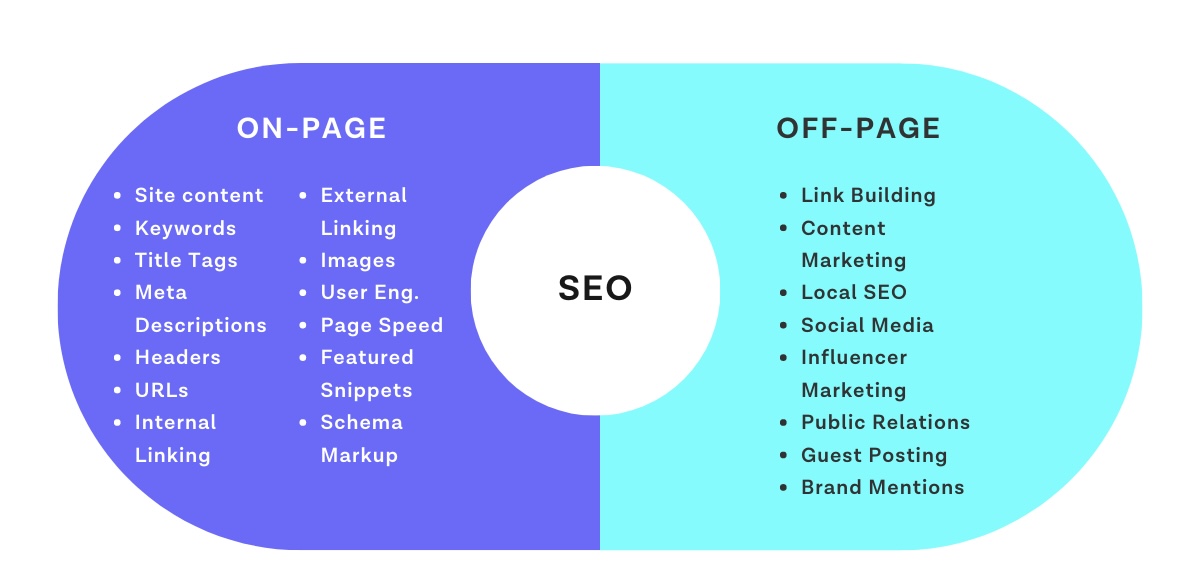
Module 11 Mega Guide Summary
In this module, we covered what off-page SEO actually is and why it functions as the third pillar alongside the technical and on-page work covered in Module 10 — with backlinks as the central signal, understood not as a simple numbers game but as a matter of authority, relevance, and natural growth pattern. We covered the fundamentals of link building in detail: the anatomy of a link, including anchor text and follow versus nofollow attributes, and why genuine link building is a naturally slow, relationship-driven process rather than something that can be rushed. We walked through proven, sustainable link building strategies — content-led link earning, legitimate guest posting, digital PR, broken link building, and resource page outreach. We drew a clear, practical line between white hat and black hat SEO, including a direct comparison of the two approaches and an honest look at the grey area between them. And we closed with concrete link acquisition techniques you can apply immediately — competitor backlink analysis, the Skyscraper Technique, effective outreach practices, journalist request platforms, genuine partnerships, directory submissions, and reclaiming unlinked mentions.
Practice exercise: Pick one competitor in your niche and run a backlink analysis using any tool available to you, free or paid. Identify three sites that link to that competitor and appear genuinely relevant to your own content. For each one, draft a short, specific, personalized outreach note — not to send yet if you're not ready, but to practice the exact skill this module spent its final section on: being specific, being brief, and offering something genuinely worth a real editor's time.
Frequently Asked Questions
How many backlinks do I actually need to rank well?
There is no fixed number, and treating link building as a pure quantity target is exactly the mindset this module cautions against. A handful of genuinely relevant, high-authority links frequently outperforms hundreds of low-quality ones. Focus on the quality and relevance factors covered in Section 1 rather than chasing a specific count.
Is guest posting still an effective link building strategy in 2026?
Yes, when done the way Section 3 describes — writing genuinely valuable content for sites your target audience actually reads, rather than low-effort content placed purely for the link. Guest posting done at scale on low-quality sites purely for links is where the strategy shifts into risky, black hat territory.
How long does it take to see the impact of link building on rankings?
Similar to the timeline discussed for SEO generally in Module 10, off-page SEO impact tends to build gradually over months rather than appearing immediately, since search engines evaluate a site's link profile as part of an ongoing pattern rather than reacting instantly to any single new link.
Can a single bad backlink hurt my site?
A single low-quality or spammy link pointing to your site — one you didn't build yourself, for instance, from a scraper site or spam network — is generally not enough on its own to cause meaningful harm, since search engines are reasonably capable of recognizing and simply ignoring isolated low-quality links. The real risk comes from a broad pattern of manipulative practices, not an isolated incident, though Google's free Disavow Tool exists for cases where a genuinely concerning, concentrated pattern of spammy links needs to be formally addressed.
Should I pay for backlinks?
No. Paid links intended to manipulate rankings are an explicit violation of search engine guidelines, as covered in Section 4, and the risk profile is genuinely poor even when the immediate offer looks inexpensive. Legitimate paid partnerships, such as properly disclosed sponsored content marked with a nofollow or sponsored attribute, are a different and acceptable category — the distinction lies in whether the link is intended and marked as a genuine editorial reference or explicitly disclosed as sponsored.
What's Next?
In the next module, we'll continue building on this SEO series. Take a moment to revisit the earlier lessons in this course if you need a refresher, since each module builds on what came before it:
- Introduction to Online Digital Marketing: A Beginner's Guide
- Module 3: Social Media Marketing (SMM) — Advertising Concepts and Platform Selection
- Module 4: Meta (Facebook) Marketing — The Complete A to Z Mega Guide
- Module 5: Instagram Marketing — The Complete A to Z Mega Guide
- Module 6: X (Formerly Twitter) Marketing — The Complete A to Z Mega Guide
- Module 7: LinkedIn Marketing — The Complete A to Z Mega Guide
- Module 8: Pinterest Marketing — The Complete A to Z Mega Guide
- Module 9: Creating a WordPress Website — The Complete A to Z Mega Guide
- Module 10: Search Engine Optimization (SEO) — The Complete A to Z Mega Guide
- Module 11: Off-Page Optimization — The Complete A to Z Mega Guide
This article was written by Sayad Md Bayezid Hosan for the SmartGen blog. For free tools to support your digital marketing journey, visit smartgentools.com.
SmartGen · Digital Marketing · Digital Marketing Course · Module 11 · Off-Page SEO · Link Building · White Hat SEO · Black Hat SEO