
Welcome to Module 5: Instagram Marketing
By now, you've built a solid foundation. You know how social media networks work, how to optimize your presence, how paid advertising functions, and you've just finished a deep dive into Meta's Facebook tools. Now it's time to focus on the platform many brands consider the most visually powerful in the entire Meta family: Instagram.
I want to be upfront with you about something before we begin. Instagram marketing is often taught in a shallow way online — "post nice photos and use hashtags" — but that advice barely scratches the surface of what actually moves the needle for a real business. This guide is written differently. It's based on how Instagram's algorithm, audience behavior, and advertising tools genuinely function, broken down step by step so you can apply it to your own business starting today, not just nod along and forget it.
Take your time with this lesson. Read a section, try it on your own profile, then come back for the next one. That's how real skills are built.
If you haven't already worked through the earlier lessons in this course, I'd encourage you to do so first, since this guide builds on concepts already covered there:
- Introduction to Online Digital Marketing: A Beginner's Guide
- Module 1: Basic Image and Video Editing with Filmora and Canva
- Module 3: Social Media Marketing (SMM) — Advertising Concepts and Platform Selection
- Module 4: Meta (Facebook) Marketing — The Complete A to Z Mega Guide
A Note on Why This Guide Is Worth Your Time
I've spent real hours inside Instagram's business tools — setting up profiles, testing content formats, running ads, and watching what actually drives results versus what just looks good on paper. Instagram changes its features fairly often, and a lot of older articles floating around the internet describe tools that don't even exist anymore. Everything in this guide reflects how Instagram's business and advertising tools work today, written so a complete beginner can follow along without getting lost in jargon.
1. Introduction to Instagram Marketing
Instagram started as a simple photo-sharing app, but it has grown into one of the most important marketing platforms on earth, used by individuals, small shops, and the world's biggest brands alike. What makes Instagram different from other platforms is its heavy focus on visual storytelling — people don't just read about a brand here, they see it, scroll through it, and form an impression within seconds.
For a business owner or marketer, Instagram offers something genuinely valuable: a place where you can show your product, your personality, and your values all at once, in a format people actually enjoy browsing rather than tolerate. This is precisely why fashion, food, beauty, fitness, travel, and lifestyle brands have found such consistent success here, but it's far from limited to those industries. Service-based businesses, educators, and even B2B companies have built thriving audiences on Instagram by showing the human side of their work.
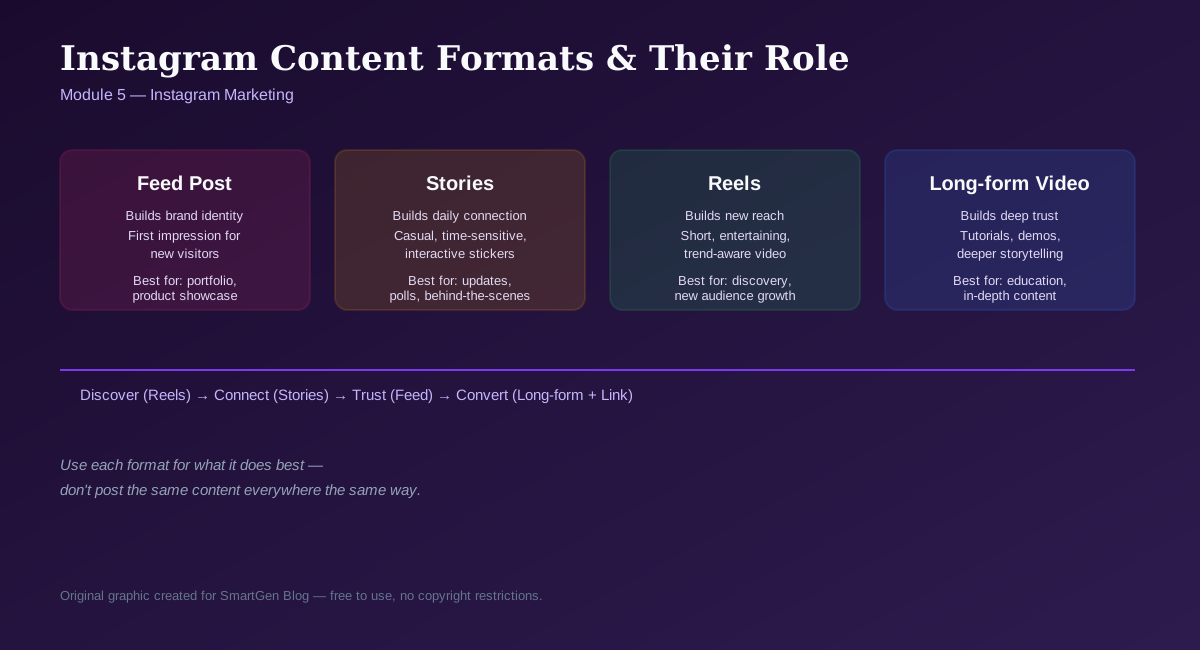
It helps to understand Instagram is no longer just about photos. The platform now blends feed posts, Stories, Reels, and longer-form video into one connected experience, and each format plays a different role in how people discover and connect with a brand. We'll cover each of these in detail as we move through this guide.
2. Creating a Winning Instagram Strategy
Posting without a plan is one of the most common reasons businesses give up on Instagram, convinced it "doesn't work" for them. The truth is usually that they never had a real strategy to begin with. Let's build one together.
Start with a clear goal. Are you trying to build brand awareness, drive website traffic, generate leads, or sell products directly? Your goal shapes everything from your content style to how you measure success, so don't skip this step.
Know exactly who you're talking to. Picture your ideal follower — their age, interests, daily habits, and the kind of content that would genuinely stop their scroll. Vague targeting like "everyone who likes fashion" leads to vague, forgettable content.
Define your content pillars. Most successful Instagram accounts build their content around three to five recurring themes, rather than posting randomly. For a bakery, this might look like behind-the-scenes baking process, finished product photography, customer reactions, and seasonal promotions. Having defined pillars makes content planning far easier and keeps your account feeling cohesive rather than scattered.
Plan a realistic posting rhythm. Consistency matters more than sheer frequency. A business that reliably posts three times a week, every week, will usually outperform one that posts daily for two weeks and then disappears for a month. Choose a rhythm you can actually sustain long-term.
Build in time to engage, not just post. A strategy that only accounts for publishing content and ignores responding to comments and messages is incomplete. Real growth on Instagram comes from genuine back-and-forth interaction, not one-way broadcasting.
3. Optimizing Your Instagram Profile
Your profile is the very first thing a potential customer sees when they discover you, whether through a hashtag, a shared post, or someone tagging your account. A weak profile can lose a customer before they ever see your actual content.
Switch to a Professional account. A Business or Creator account unlocks features personal accounts simply don't have — contact buttons, audience insights, the ability to run ads, and access to your Instagram Shop if you sell products.
Choose a clear, recognizable profile photo. For most businesses, this should be your logo, sized and cropped so it's still recognizable at the small size it appears throughout the app.
Write a bio that actually tells people what you do. You have a very limited character count, so every word should earn its place. A strong bio usually answers three things quickly: who you help, what you offer, and why someone should care, often finished with a light personality touch that reflects your brand voice.
Use your one clickable link wisely. Since Instagram only allows a single clickable link in your bio (outside of Stories with enough followers), many businesses use a "link in bio" tool to direct visitors to a small menu of destinations — your website, your shop, your latest blog post, or a current promotion.
Curate your grid intentionally. The nine photos a new visitor sees first often shape their entire impression of your brand. This doesn't mean every post needs to be perfectly styled, but a consistent color palette, tone, and quality level go a long way toward building trust at a glance.
Use Highlights to organize your Stories. Story Highlights, displayed just below your bio, are a chance to keep your best, most useful Stories permanently visible — think of them as a mini menu covering your products, FAQs, customer reviews, or behind-the-scenes content.
4. Content Creation and Curation
This is where the skills from Module 1 (Filmora and Canva) become directly useful. Instagram rewards genuinely good content, not just frequent content, so let's talk about what "good" actually means here.
Creation versus curation. Creation means producing original content yourself — your own photos, videos, and graphics. Curation means thoughtfully sharing relevant content from others (with proper credit) or repurposing existing material, such as turning a customer testimonial into a styled graphic. A healthy content mix usually leans heavily toward original creation, with curation used sparingly to add variety and save production time.
Quality fundamentals that matter most. Good lighting makes an enormous difference, often more than expensive equipment — natural light near a window frequently outperforms artificial lighting for product and lifestyle shots. Clean, uncluttered backgrounds keep attention on your subject rather than distracting details. And consistent editing, whether that's a particular color tone or filter style, helps your content feel like it belongs to one cohesive brand rather than a random collection of unrelated posts.
Variety keeps an audience interested. Mix close-up product shots with lifestyle context (showing your product actually being used), educational content that teaches your audience something useful, and personal, behind-the-scenes moments that build a genuine human connection with your brand.
Batch your content creation. Rather than scrambling to create something new every single day, set aside dedicated time to shoot and design multiple pieces of content at once, then schedule them out over the following weeks. This single habit alone solves most consistency problems beginners struggle with.
5. Instagram Engagement Strategies
Posting content is only half the equation. Real growth comes from genuine engagement, both from your audience toward you and from you toward your audience.
Write captions that invite a response. A caption that ends with a genuine question, rather than just a statement, naturally encourages comments, and comments are one of the strongest signals Instagram's system uses to determine how widely to show your content.
Reply to every comment and message you can. This sounds simple, but many businesses neglect it, and it's one of the fastest ways to build real loyalty. A customer who gets a genuine, timely reply is far more likely to become a repeat customer and recommend you to others.
Engage with your community proactively. Spend time commenting thoughtfully on posts from your followers, relevant accounts in your niche, and even friendly competitors. This isn't about chasing follow-backs; it's about becoming a visible, active member of the community you're trying to reach.
Use interactive Story features. Polls, question stickers, quizzes, and sliders within Stories are specifically designed to spark interaction, and they give you valuable, direct feedback from your audience about what they actually want to see more of.
Collaborate with others. Features like Instagram's Collab post (where a single post displays on both accounts' grids and shares engagement) and tagging relevant accounts in your content can introduce your brand to entirely new audiences through genuine partnership rather than paid promotion alone.
6. Instagram Ads and Analytics
When you're ready to grow beyond organic reach, Instagram's advertising tools, built on the same Meta Ads Manager covered in Module 4, offer precise, scalable ways to reach new audiences.
How Instagram ads work. Since Instagram ads run through Meta's Ads Manager, everything from campaign objectives to targeting options to ad formats covered in Module 4 applies directly here. The main difference is creative format expectations — Instagram audiences respond particularly well to polished, native-feeling visuals and short-form video, more so than text-heavy ad creative.
Instagram-specific ad placements. You can choose to show ads within the main Feed, within Stories (full-screen, vertical format), within Explore (where users actively browse for new content), and within Reels, each requiring slightly different creative dimensions and pacing to perform well.
Reading your Instagram Insights. If you've switched to a Professional account, you'll have access to Insights, Instagram's built-in analytics tool. Pay close attention to reach (how many unique accounts saw your content), engagement rate (interactions relative to reach, often a better quality signal than raw numbers), profile visits and website clicks (showing real interest beyond the post itself), and follower growth trends over time, rather than any single post's performance in isolation.
Letting data guide your decisions. Rather than guessing what's working, review your Insights regularly and notice patterns: which content types, posting times, and topics consistently perform best for your specific audience. This is far more reliable than following generic advice about "best practices," since every audience behaves a little differently.
7. Instagram Stories and IGTV Marketing
Stories and longer-form video deserve special attention, since they behave quite differently from regular feed posts.
Why Stories matter so much. Stories appear at the very top of the app, are highly visible, and disappear after 24 hours unless saved to Highlights, which creates a sense of immediacy and authenticity that polished feed posts sometimes lack. Many brands use Stories for behind-the-scenes content, quick updates, time-sensitive promotions, and casual, less-produced moments that feel more personal than a curated feed post.
Making the most of Story features. Use stickers like polls, countdowns, and question boxes to boost interaction. Add location tags and relevant hashtags to increase discoverability beyond just your existing followers. And use the swipe-up or link sticker feature (available based on account size and region) to drive direct traffic to your website or offers.
Understanding longer-form video. Instagram has consolidated most of its longer-form video features under the broader video and Reels system rather than the standalone IGTV app of earlier years, but the underlying principle remains the same: longer-form video content is valuable for tutorials, in-depth product demonstrations, interviews, and storytelling that simply can't fit into a 15 or 30-second clip.
When to use longer-form video versus Stories versus Reels. Use Stories for quick, casual, time-sensitive updates. Use Reels for short, highly shareable, entertainment-driven content aimed at reaching new audiences. Use longer-form video when you genuinely need more time to explain, teach, or tell a deeper story that a shorter format can't properly capture.
8. Influencer Marketing on Instagram
Instagram remains the single most active platform for influencer marketing, and understanding how to approach it properly can open doors that paid advertising alone cannot.
Why influencer marketing works. People trust recommendations from individuals they already follow and relate to far more than they trust a traditional advertisement, since the relationship between a follower and an influencer already carries built-in credibility and familiarity.
Macro versus micro-influencers. Macro-influencers have large followings and broad reach, but typically come with a higher cost and sometimes lower engagement rates relative to their audience size. Micro and nano-influencers (generally those with smaller, tightly-knit niche audiences) often deliver stronger engagement and trust per follower, and are usually far more affordable for small and growing businesses, making them an excellent starting point.
Finding the right influencer fit. Look beyond follower count alone, and pay close attention to whether an influencer's actual audience matches your target customer, whether their engagement (comments, saves, shares) looks genuine rather than inflated, and whether their content style and values align naturally with your brand, since a forced, mismatched partnership tends to feel inauthentic to both audiences involved.
Structuring a simple influencer partnership. Common approaches include gifting products in exchange for honest content, paying a flat fee for a defined set of deliverables (such as a certain number of posts or Stories), or offering an affiliate commission structure where the influencer earns a percentage of sales they directly generate. Always clarify expectations in writing beforehand, including deliverables, timeline, and whether you're permitted to repurpose their content in your own marketing afterward.
Measuring real results. Track more than just vanity metrics like likes. Pay attention to actual website traffic, discount code usage, or affiliate link conversions generated by the partnership, since these numbers tell you whether the collaboration is genuinely driving business results rather than just temporary visibility.
Visual Summary
Below is an original infographic mapping the Instagram content formats covered in this module to the specific role each one plays in your overall marketing strategy. This graphic was created specifically for this guide and is completely free of copyright restrictions.
Module 5 Mega Guide Summary
We covered a lot of ground in this module. We introduced what makes Instagram marketing genuinely different from other platforms, built a real strategic framework rather than vague advice, walked through optimizing every part of your profile, explored what separates strong content from forgettable content, outlined real engagement strategies that build community rather than just follower counts, broke down how Instagram advertising and analytics actually work, clarified when to use Stories versus Reels versus longer-form video, and laid out a practical approach to influencer marketing that goes beyond just follower counts.
Practice exercise: Pick one content pillar from your own business, and plan out one week's worth of content around it: two feed posts, three Stories, and one Reel. Before publishing, review your profile against the optimization checklist in Section 3 of this guide and update anything that's missing.
What's Next?
In Module 6, we'll continue expanding your platform-specific marketing skills. If you haven't already, take a look back through the earlier lessons in this course to keep building on a solid foundation:
- Introduction to Online Digital Marketing: A Beginner's Guide
- Module 1: Basic Image and Video Editing with Filmora and Canva
- Module 3: Social Media Marketing (SMM) — Advertising Concepts and Platform Selection
- Module 4: Meta (Facebook) Marketing — The Complete A to Z Mega Guide
- Module 5: Instagram Marketing — The Complete A to Z Mega Guide
- Module 6: X (Formerly Twitter) Marketing — The Complete A to Z Mega Guide
- Module 7: LinkedIn Marketing — The Complete A to Z Mega Guide
- Module 8: Pinterest Marketing — The Complete A to Z Mega Guide
- Module 9: Creating a WordPress Website — The Complete A to Z Mega Guide
- Module 10: Search Engine Optimization (SEO) — The Complete A to Z Mega Guide
This article was written by Sayad Md Bayezid Hosan for the SmartGen blog. For free tools to support your digital marketing journey, visit smartgentools.com.