
Welcome to Module 2
In Module 1, you learned how to create basic visual content using Filmora and Canva. Now that you can produce images and videos, it's time to learn where and how to share them effectively. This brings us to Module 2: Social Media Optimization (SMO).
Social Media Optimization is one of the most important — and most misunderstood — skills in digital marketing. Many beginners think SMO simply means "posting on social media regularly." In reality, it's a complete discipline: understanding how each platform works, optimizing your profile and content for visibility and trust, and building genuine engagement that turns followers into customers.
This module is long and detailed on purpose. Take your time, re-read sections if needed, and treat this as a reference guide you can return to whenever you're working on your social media strategy.
1. Introduction to Social Media Networks
A social media network is an online platform that allows people to create profiles, connect with others, share content, and interact through likes, comments, shares, and messages. What began in the early 2000s as simple personal networking sites has evolved into one of the most powerful marketing ecosystems in the world.
For a digital marketer, a social media network is far more than a place to "stay in touch with friends." It is a discovery engine, a customer service channel, a brand-building stage, and — increasingly — a direct sales platform, all at once.
Understanding social media networks starts with understanding three core ideas:
The newsfeed/algorithm. Every major platform uses an algorithm to decide which content gets shown to which users, based on factors like past behavior, engagement patterns, and content relevance. Learning to "work with" rather than "fight against" an algorithm is central to SMO.
The profile. Your social media profile functions like a digital storefront. It's often the very first impression someone has of your brand, and a weak or incomplete profile can cause potential customers to leave before they even see your content.
The community. Unlike traditional advertising, social media is fundamentally about two-way interaction. Comments, replies, shares, and direct messages all build the relationship between a brand and its audience — and that relationship is what eventually drives loyalty and sales.
2. Types of Social Media Websites
Not all social media platforms serve the same purpose, and a common beginner mistake is treating every platform the same way. Let's break down the major types and the platforms that define them.
Social networking platforms focus on connecting people and communities. Facebook remains the largest of these, ideal for community building, local business pages, groups, and reaching a broad, often older demographic alongside younger users.
Photo and video-sharing platforms are built around visual storytelling. Instagram is the leading example, known for strong visuals, Stories, Reels, and a younger-skewing but very broad audience, making it essential for brands in fashion, food, beauty, travel, and lifestyle.
Professional networking platforms focus on careers, business relationships, and industry authority. LinkedIn dominates this category, making it the primary platform for B2B marketing, recruitment, thought leadership, and professional service businesses.
Microblogging and real-time platforms are built for short bursts of text, opinions, and live conversation. X (formerly Twitter) is the most prominent example, valuable for real-time updates, customer service, public conversations, and trending topic engagement.
Visual discovery and bookmarking platforms function more like a search engine for ideas than a traditional social network. Pinterest fits here, especially powerful for niches like home decor, recipes, fashion, weddings, and DIY content, where users actively search for inspiration and ideas before later searching to buy.
Short-form video platforms prioritize fast, highly engaging video content above all else. TikTok and YouTube Shorts lead this category, rewarding creativity and authenticity over polish, and currently driving some of the highest organic reach of any content format.
Knowing which type of platform fits your audience and content style is the very first strategic decision in any social media plan — trying to be excellent on every platform at once is rarely realistic, especially for beginners.
3. Social Media Optimization (SMO) Concepts
Now that you understand the platforms, let's define SMO properly. Social Media Optimization is the process of strategically improving your social media presence — profiles, content, posting habits, and engagement — to increase visibility, build brand awareness, and drive meaningful traffic or conversions.
Several core concepts form the foundation of effective SMO:
Consistency. This applies to both posting frequency and visual branding. Accounts that post regularly and maintain a recognizable look (colors, fonts, tone of voice) build audience trust and recognition far faster than accounts that post sporadically with mismatched branding.
Engagement over reach. A common beginner mistake is chasing follower count alone. A smaller, highly engaged audience that comments, shares, and responds to your content is far more valuable — and far more likely to convert into paying customers — than a large, passive following.
Platform-native content. Content that's clearly repurposed without adjustment (like a vertical TikTok video awkwardly posted to LinkedIn) tends to underperform. Optimizing means adapting your message, format, and tone to fit how people actually use each specific platform.
Optimal posting times. Each platform and audience has periods of higher activity. Posting when your specific audience is most active increases the chances your content is seen before the algorithm moves on to newer posts.
Social proof. Likes, shares, comments, and follower counts all function as trust signals to new visitors. A profile with visible engagement and positive interaction appears more credible than one with no activity at all.
Cross-promotion. Linking your social profiles together — and to your website — helps audiences find you across multiple channels, reinforcing brand recognition and giving people more touchpoints to convert.
SMO isn't a single action, but an ongoing process of testing, measuring, and refining your presence across these concepts.
4. Hashtags
Hashtags are clickable keywords or phrases (preceded by the # symbol) that categorize content and make it discoverable to people who aren't already following you. They function similarly to keywords in SEO — they help the right audience find your content even if they've never heard of your brand before.
Why Hashtags Matter
Hashtags extend your content's reach beyond your existing followers, since people frequently search or browse hashtags directly to find content on topics they're interested in. They also help platform algorithms understand the topic and context of your content, which can influence who it gets shown to.
Types of Hashtags to Use
Branded hashtags are unique to your business (such as a custom campaign tag), helping you track user-generated content and build community identity. Industry or niche hashtags relate directly to your specific field (for example, #DigitalMarketingTips or #SmallBusinessOwner), connecting you with an audience already interested in that topic. Trending or seasonal hashtags tie into current events, holidays, or viral trends, offering a temporary boost in visibility when used relevantly and naturally — never forced. Community hashtags connect you to broader groups and movements relevant to your audience, helping build relationships beyond just transactional followers.
Hashtag Best Practices
Research before using a hashtag — check that it's actually active and relevant, not just popular, since irrelevant hashtags can hurt rather than help your reach. Mix hashtag sizes by combining a few high-volume, broad hashtags with several smaller, niche-specific ones, since extremely popular hashtags can cause your post to get buried quickly among massive competition. Keep hashtag count appropriate to the platform — Instagram traditionally tolerates more hashtags than X or LinkedIn, where a few well-chosen tags work better than a long crowded list. And always place hashtags naturally, either within your caption or in a clean block at the end, depending on what looks cleanest for that specific platform.
5. Social Media Content Creation (Image, Text, Videos)
Strong SMO depends entirely on the quality of what you actually post. Let's break this down by content format.
Image Content
Images remain a staple of social media because they communicate instantly. Effective image content uses high-resolution, well-lit photos rather than blurry or poorly cropped ones, follows consistent branding through colors, fonts, and style (this is where the Canva skills from Module 1 directly apply), and includes minimal but clear text overlays when a message needs reinforcing visually.
Text Content
Even on visual platforms, the accompanying caption matters enormously. Strong text content opens with a hook in the very first line, since most platforms truncate captions and only show a "see more" option for the rest. It should write in a natural, conversational tone that matches your brand's personality, and close with a clear call to action — asking a question, inviting comments, or directing followers to a link.
Video Content
As covered in Module 1, video typically receives the highest engagement of any content format across most platforms today. For social media specifically, the most effective videos are short and front-loaded with the most interesting or valuable moment in the first few seconds, designed to work with the sound off through captions or on-screen text, and formatted vertically (9:16) for platforms like Reels, Stories, and TikTok, where this format performs significantly better than horizontal video.
A Simple Content Creation Checklist
Before publishing any post, ask yourself: Does this provide value, entertainment, or a clear message within the first few seconds? Is the visual quality clean and on-brand? Is the caption clear, with a defined call to action? Are the hashtags relevant and appropriately sized for this platform? Is this formatted correctly for where it's being posted?
6. How to Create a Strong Profile
Your profile is the foundation everything else in this module builds on. A weak profile undermines even the best content, while a strong, complete profile builds instant credibility. Here's how to optimize a profile on each major platform.
Use a clear, recognizable profile photo (typically your logo for a business page) and a high-quality cover photo that reflects your brand or current offering. Complete the "About" section fully, including your website, contact information, business hours, and a concise description of what you offer. Choose the correct Page category, since this affects how Facebook displays and recommends your page to relevant searches. Pin your most important post — such as a key offer or your best-performing content — to the top of your page.
Switch to a Business or Creator account to unlock analytics and contact buttons. Write a clear, benefit-focused bio within the limited character count, clearly stating who you help and how. Use a single clickable link in your bio strategically (linking to your website, a link-in-bio tool, or your most important current offer). Maintain a visually cohesive grid, since your top nine posts are often the first impression for new visitors, and inconsistent visuals can undermine an otherwise strong account.
X (Twitter)
Write a concise, personality-driven bio, since X rewards authentic voice and quick wit more than overly formal corporate language. Use a clear profile photo and a header image that reinforces your brand or current focus. Pin a strong introductory or high-performing tweet to the top of your profile for new visitors. Keep your profile active with consistent posting, since X's real-time nature means inactive accounts quickly appear outdated.
For personal profiles, write a headline that goes beyond just your job title — describe the specific value you provide. For business pages, write a clear "About" section explaining what your company does, who it serves, and your core value proposition. Use a professional profile photo and a branded banner image. Request and showcase recommendations or endorsements where possible, since these serve as powerful trust signals on this particularly credibility-driven platform.
Convert to a Business account to access analytics and rich pins. Write a keyword-rich bio and board names, since Pinterest functions heavily like a search engine — people find content through search terms, not just by following accounts. Organize your boards clearly by topic, making it easy for visitors to explore content relevant to their specific interests. Claim your website within Pinterest settings, which unlocks additional analytics and adds credibility to your pins.
Visual Summary
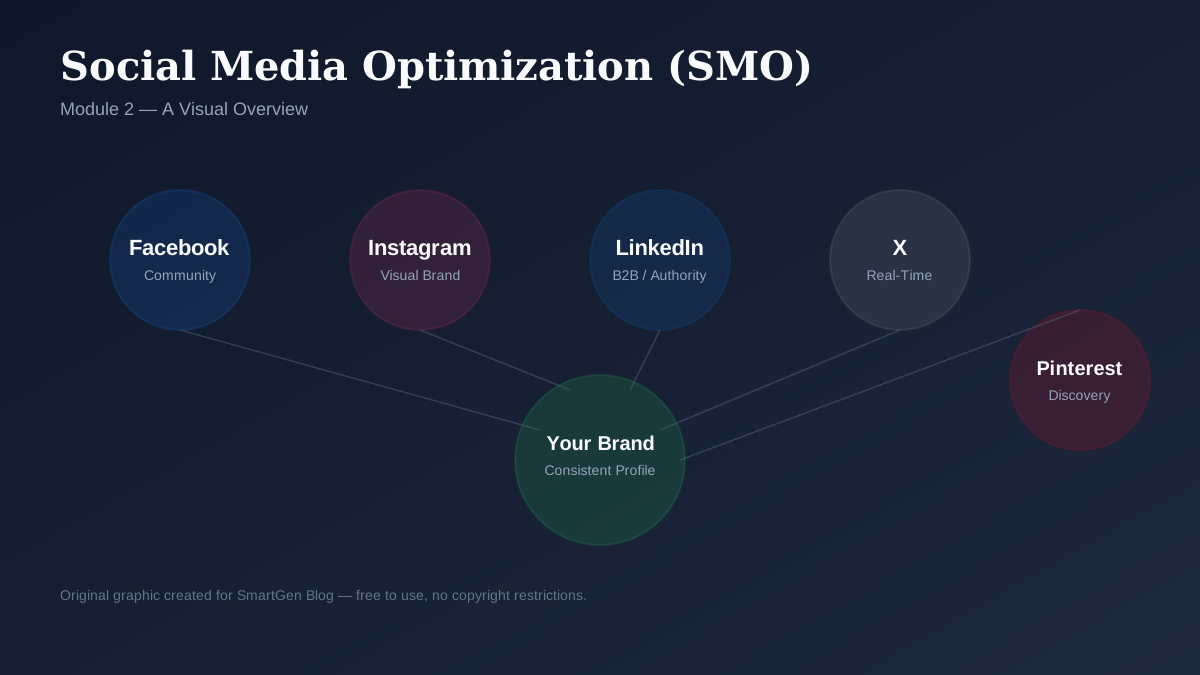
Below is an original infographic summarizing how the major platforms covered in this module connect back to a consistent brand profile at the center of your SMO strategy. This graphic was created specifically for this guide and is completely free of copyright restrictions — feel free to use it directly on this article.
Module 2 Summary and Practice Exercise
In this module, we covered what social media networks are and why they matter, the major types of platforms and what each is best suited for, the core concepts behind effective SMO, how to research and use hashtags strategically, how to create strong image, text, and video content, and exactly how to build a strong, optimized profile on five major platforms.
Practice exercise: Choose one platform most relevant to your business or niche. Rewrite your bio, update your profile and cover photo, and create one piece of content (image or video, using your Module 1 skills) optimized specifically for that platform, complete with a well-researched set of hashtags and a clear call to action.
What's Next?
In Module 3, we'll move from optimizing your social presence to driving consistent organic traffic through Search Engine Optimization (SEO) — learning exactly how Google decides which pages to show, and how to make sure yours is one of them.
- Introduction to Online Digital Marketing: A Beginner's Guide
- Module 3: Social Media Marketing (SMM) — Advertising Concepts and Platform Selection
- Module 4: Meta (Facebook) Marketing — The Complete A to Z Mega Guide
- Module 5: Instagram Marketing — The Complete A to Z Mega Guide
- Module 6: X (Formerly Twitter) Marketing — The Complete A to Z Mega Guide
- Module 7: LinkedIn Marketing — The Complete A to Z Mega Guide
- Module 8: Pinterest Marketing — The Complete A to Z Mega Guide
- Module 9: Creating a WordPress Website — The Complete A to Z Mega Guide
- Module 10: Search Engine Optimization (SEO) — The Complete A to Z Mega Guide
This article was written by Sayad Md Bayezid Hosan for the SmartGen blog. For free tools to support your digital marketing journey, visit smartgentools.com.